

Improving Cable Assembly Reliability for a Medical Device OEM
Challenge
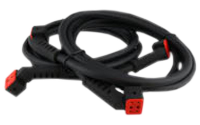
An existing Epec customer in the medical device industry approached our team looking to improve the long-term reliability of a cable assembly that Epec was already manufacturing for one of their products. The assembly was used within a medical device application where durability, consistency, and workmanship quality were critical to overall product performance.
The opportunity began when the customer scheduled a Microsoft Teams meeting with Epec’s engineering and manufacturing teams to discuss a field reliability issue they had started observing. While the existing cable assembly design had generally performed well, a small number of units experienced failures after extended movement and handling during use.
The root cause centered around a section of the assembly where silicone was applied over exposed wires before a protective plastic cover was installed. In certain situations, repeated movement or flexing caused the wires to break away from the soldered pins beneath the protective cover. Although the issue was not widespread, the customer wanted to proactively address the problem before larger production volumes were impacted.
The customer turned to Epec not only as their manufacturing partner, but also as a technical resource capable of helping evaluate alternative materials and assembly methods. Their primary objective was to identify a replacement material that could better protect the soldered wire connections while still meeting the strict performance requirements of the medical application.
Any proposed solution would need to:
- Prevent wire movement and reduce the likelihood of broken solder joints.
- Maintain full electrical continuity after assembly.
- Pass critical leak testing requirements.
- Be suitable for use in a medical device environment.
- Allow the customer to evaluate prototype samples before implementing a production change.
Solution
Epec’s engineering team immediately began reviewing the existing assembly process and material characteristics to identify opportunities for improvement. Rather than simply replacing the failed components, the focus was on understanding how the material properties of the existing silicone contributed to movement within the assembly over time.
To identify a stronger and more reliable alternative, Epec collaborated directly with one of our adhesive material suppliers. Together, the teams evaluated several candidate materials and ultimately identified a medical-grade epoxy adhesive that offered significantly greater hardness and structural support after curing.
The selected epoxy provided multiple advantages over the original silicone material. Its increased strength helped stabilize the wire terminations and reduce movement around the soldered pin connections, minimizing the mechanical stress that had previously caused wire failures. At the same time, the material remained compatible with the assembly’s electrical and environmental requirements.
An additional benefit was the epoxy’s clear appearance after curing. Unlike opaque materials that can obscure internal features, the transparent adhesive allowed assembly technicians and inspectors to visually verify the condition of the wires and solder joints after processing. This improved visibility added another layer of quality assurance during manufacturing and inspection.
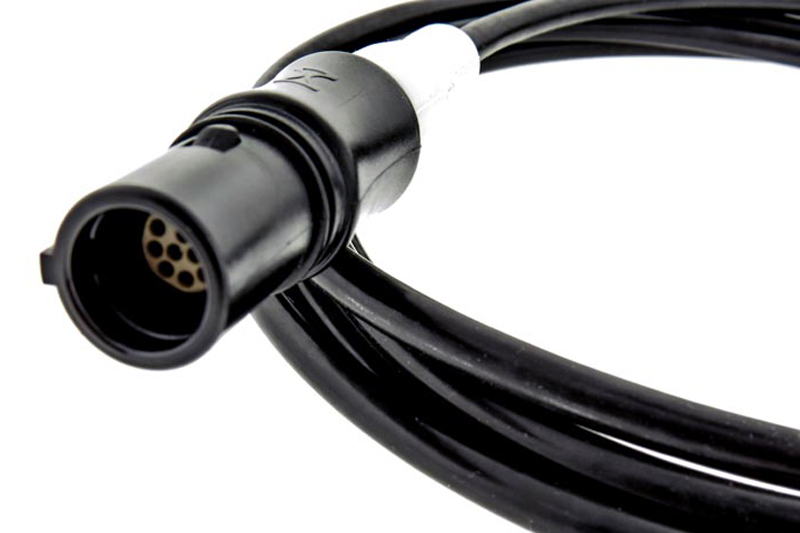 Improving Cable Assembly Reliability for a Medical Device OEM
Once the material was selected, Epec produced a complete set of validation samples and supporting test data. The updated assemblies underwent continuity testing and leak testing to verify that the new epoxy solution met all functional requirements without negatively affecting the overall assembly design.
Result
The completed sample assemblies were sent to the customer for internal evaluation and field review. After testing the updated cable assemblies, the customer confirmed that the previous wire breakage issue was no longer present.
The new epoxy solution successfully improved the mechanical stability of the soldered wire connections while maintaining the electrical and environmental performance required for the medical device application. The improved assembly design also provided added confidence during inspection due to the transparency of the cured material.
Based on the positive test results, the customer approved moving forward with transitioning the cable assembly to the new epoxy-based build process for future production.
This project highlights the value of Epec’s collaborative engineering approach. By working directly with both the customer and material suppliers, Epec was able to quickly identify the root cause of a field reliability issue, validate an improved solution, and provide production-ready samples that solved the problem without requiring a complete redesign of the cable assembly.
For medical device manufacturers, where reliability and consistency are essential, having a manufacturing partner that can respond quickly to field feedback and implement engineered process improvements can make a significant difference in long-term product performance and customer satisfaction.
Looking to Improve the Reliability of Your Medical Device Cable Assemblies?
Epec partners with medical device manufacturers to solve complex cable assembly challenges through collaborative engineering, material expertise, and proven manufacturing processes. Whether you're addressing field failures, improving durability, or evaluating alternative materials, our team can help develop and validate a solution tailored to your application.
Contact us to discuss your project requirements and learn how Epec can support your next cable assembly program.
Request a Quote Request Design Support