

Embedded Battery Chargers
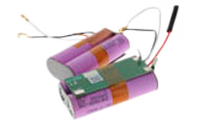
Embedded battery chargers integrate charging circuitry directly into the battery pack, allowing it to accept input power from various sources without requiring a separate charger. This approach supports multiple battery chemistries within the same product while ensuring proper charging algorithms are applied. Tradeoffs include increased initial cost, added heat near cells, and disposal of charger circuitry at end of battery life.
Here are some of the advantages and disadvantages of embedded battery chargers.
At a Glance: Embedded Battery Chargers
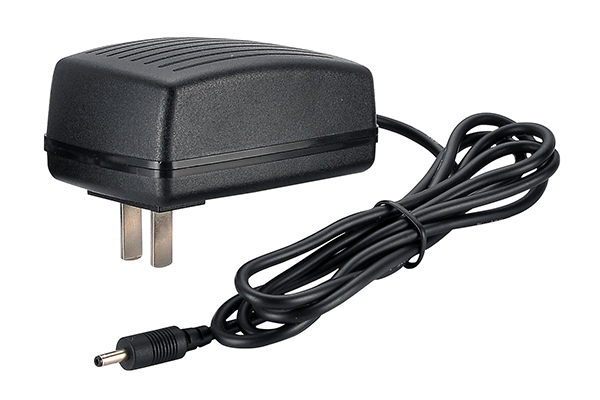
- Embedded battery chargers integrate charging circuitry directly into the battery pack, allowing it to accept unregulated power from sources such as wall adapters, car adapters, and USB ports.
- Each battery pack includes chemistry-specific charging control, enabling the same product to support NiMH, lithium-ion, or non-rechargeable configurations without changing the system.
- This approach improves charging consistency and simplifies user experience, with tradeoffs including higher initial cost, added internal heat, and disposal of charger circuitry at end of battery life.
What Is An Embedded Charger?
Embedded battery chargers are integrated directly into the battery pack, making the charger part of the battery itself. This differs from traditional approaches where charging is performed externally using a separate battery charger or through a charger built into the host device.
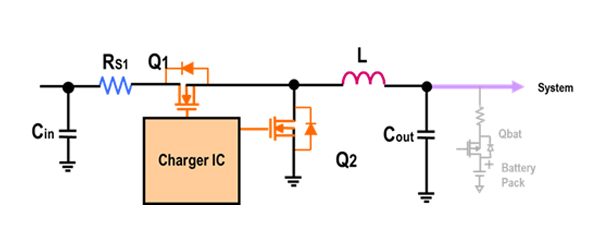 Embedded Battery Charger IC Diagram
Rechargeable battery packs can be charged in several ways depending on chemistry and application. Simpler systems, such as those using NiCd or NiMH cells, often rely on removable batteries placed into off-the-shelf chargers. Larger battery packs, such as those used in power tools, are also commonly removed and charged with dedicated external units. Other systems rely on external power supplies that feed an internal charger located within the device.
An embedded battery charger consolidates this functionality by placing the charging circuitry within the battery pack itself.
How Embedded Battery Chargers Work
An embedded battery charger allows power to be routed directly into the battery pack, where the internal charger manages the charging process using the correct algorithm for the installed chemistry.
This configuration supports the use of unregulated input power from sources such as:
- Wall power adapters
- Car cigarette adapters
- USB ports
The charging circuitry inside the battery pack adjusts this input power appropriately to ensure proper charging behavior. This eliminates the need for a dedicated external charger while maintaining compatibility with different input sources.
Supporting Multiple Battery Chemistries
One of the key advantages of embedded battery chargers is the ability to support different battery chemistries within the same product design.
For Example:
- A lower-cost version of a product may use a NiMH battery pack with an embedded NiMH charger.
- A higher-performance version of the same product may use a lithium-ion battery pack with its own embedded charger designed for that chemistry.
- A non-rechargeable version can use a primary battery without any charging circuitry, allowing the product to operate directly from input power without attempting to recharge the battery.
Each battery pack contains its own charging logic, ensuring proper charging regardless of the chemistry installed in the device.
Advantages of Embedded Battery Chargers
Embedding the charger within the battery pack provides several functional and user-level benefits:
- Increased battery life due to consistent and proper charging across environmental conditions
- Reduced risk of damage from unauthorized or incompatible external battery chargers
- Elimination of the need for separate external charging devices
- A simpler user experience, as charging is handled within the battery pack itself
These advantages are particularly useful in applications where ease of use and consistent charging performance are important.
Disadvantages of Embedded Battery Chargers
While embedded chargers provide flexibility and convenience, they also introduce certain trade-offs that must be considered:
- Higher initial system cost, which may be offset over time by improved battery life
- Charger circuitry is discarded when the battery pack reaches end of life
- Heat generated by the internal charger is located near the cells, which can accelerate aging
These factors should be evaluated when determining whether an embedded charging solution is appropriate for a given application.
Why Use an Embedded Battery Charger?
Embedded battery chargers are often used in applications requiring flexibility, backward compatibility, or simplified system upgrades.
They are particularly useful when:
- A product must support multiple battery chemistries without redesigning the host system
- Existing products in the field require upgraded battery performance without modifying the original charger
- Input power from various sources must be accepted without complex external charging systems
In these cases, the embedded charger can take power from an existing system and convert it to properly charge the installed battery chemistry without triggering errors in the original design.
Frequently Asked Questions
Quick Links
- What is an embedded battery charger?
- How does an embedded battery charger handle different chemistries?
- What types of input power can be used with embedded chargers?
- Why would a product use different battery types with the same system?
- What are the main advantages of embedded battery chargers?
- What are the disadvantages of embedding the charger in the battery pack?
- When is an embedded charger useful for product updates?
What is an embedded battery charger?
An embedded battery charger is a charging circuit built directly into the battery pack, allowing the battery to control its own charging process without relying on an external charger.
How does an embedded battery charger handle different chemistries?
Each battery pack includes charging circuitry specific to its chemistry, such as NiMH or lithium-ion, ensuring the correct charging algorithm is used for that battery type.
What types of input power can be used with embedded chargers?
Embedded chargers can accept unregulated power from sources such as wall adapters, car adapters, and USB ports, which is then conditioned internally.
Why would a product use different battery types with the same system?
A product may offer variations with different performance or cost levels, using different battery chemistries while maintaining the same overall system design.
What are the main advantages of embedded battery chargers?
They improve battery life through proper charging, reduce dependence on external chargers, and simplify the user experience.
What are the disadvantages of embedding the charger in the battery pack?
They increase upfront cost, place heat-generating circuitry near the cells, and result in charger electronics being discarded when the battery reaches end of life.
When is an embedded charger useful for product updates?
It is useful when upgrading battery chemistry in an existing product, as it allows the new battery to charge correctly using the original system’s power input without modification.
Looking For An Embedded Charger Solutions?
Simplify your charging experience with embedded battery chargers. Ideal for multi-chemistry applications. Contact us to learn more!
Request a Quote Request Design Support Request More InformationRequest a FREE Quote!
We are here to help you will all your custom battery pack needs.
Get Your Quote Now! Not Ready for a Quote? Request more info or email us your inquiry.Ebook - BMS Design Guide for Custom Battery Packs
 Download Your Copy
...or Download Our Custom Battery Pack Design Guide