
Shielded Cable Assemblies
Why Is Shielding Needed?
Cable assemblies used for data transmission must be protected from electromagnetic interference (EMI), a form of electrical noise caused by electromagnetic induction or radiation from external sources. EMI can interrupt or obstruct signal transmission, reduce data quality, or result in total signal loss. Common EMI sources include nearby electrical circuits, machinery, and any object carrying rapidly changing electrical currents.
Many realworld installations, such as factory floors, data centers, and office environments, are electrically noisy. While a cable’s insulation and outer jacket provide mechanical and environmental protection, these materials offer no defense against electromagnetic energy. Shielding is required to maintain signal integrity in these conditions.
See our blog post on why shielded cables are used in assemblies for more information.
At a Glance: Shielded Cables
- Shielded cable assemblies protect datacarrying conductors from electromagnetic interference that can degrade signal quality or cause complete data loss.
- EMI is common in electrically noisy environments like factory floors, data centers, and offices, where standard insulation and jackets provide no electromagnetic protection.
- Foil, braided, or multilayer shielding is used based on the environment, grounding strategy, and mechanical needs such as flexibility and durability.
Why Is Shielding Needed?
EMI can disrupt the operation of neighboring equipment and interfere with data transmission. Without shielding, cables are vulnerable to ambient electromagnetic noise that can limit circuit performance. Even when installed correctly, unshielded assemblies may experience degraded reliability in electrically active environments.
In some controlled installations, unshielded cables may be acceptable. When run inside metal enclosures or metal conduit, the surrounding structure can shield the electronics from ambient EMI. In most applications, however, shielding within the cable itself provides more consistent and reliable protection.

Combating EMI with Shielded Cables
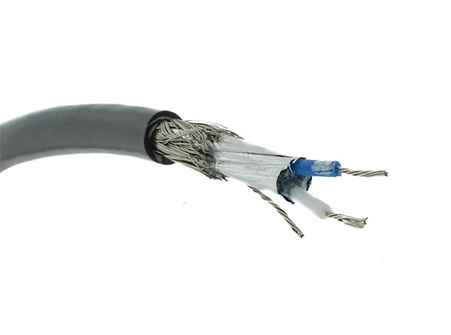
Shielding is the primary method used to combat EMI in cable assemblies. A shield surrounds the inner signal or powercarrying conductors and mitigates interference in two ways:
- It reflects incoming electromagnetic energy.
- Collects noise to be conducted away to ground.
Shielding effectiveness depends on several factors, including the electrical environment, system grounding, cable diameter, flexibility requirements, weight, and overall cost. Different levels of shielding are available, allowing assemblies to be optimized for specific installation conditions and performance needs.
Types of Shielding
Foil Shielding
Foil shielding uses a thin layer of copper or aluminum bonded to a carrier material such as polyester. This construction adds strength while maintaining minimal thickness. Foil shields provide 100% coverage of the conductors, offering complete isolation from external electromagnetic energy.
Because foil is thin and delicate, termination can be challenging, particularly when attaching connectors. Instead of grounding the entire shield, a drain wire is typically used to terminate and ground the foil shield.
Braided Shielding
Braided shields consist of woven bare or tinned copper wires surrounding the conductors. This structure provides a lowresistance path to ground and is easier to terminate using crimping or soldering methods.
Braided shields do not offer full coverage. Depending on the weave, coverage typically ranges from 70% to 95%. Due to copper’s higher conductivity and the added bulk of the braid, braided shields are generally more effective than foil shields, but they increase cable size and cost.
MultiLayer Shielding
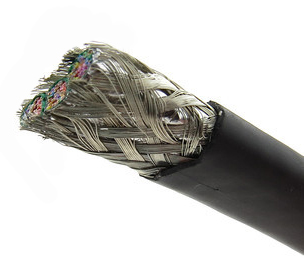
In very noisy environments, multiple shielding layers are often used. A common construction combines both foil and braid, improving overall EMI protection. In composite cables, individual pairs may be foilshielded to reduce crosstalk, with an additional overall shield applied to the entire cable.
Selecting the Right Shielded Cable for the Application
Effective EMI mitigation requires selecting a cable with shielding appropriate for the environment. Some applications may only require foil shielding, while others may demand braided or combined foilandbraid constructions.
Cable motion must also be considered. Assemblies that are repeatedly flexed often require spirally wrapped shields rather than braided shields. In flexing applications, foil shields can tear and should generally be avoided.
Proper grounding is critical to shield performance. Equipment should be connected to an earth ground whenever possible. Connectors should allow full 360degree shield termination and provide shielding effectiveness equal to the cable itself. Connector backshells are typically metalcoated plastic, cast zinc, or aluminum. All components of a shielded cable assembly must be matched, as cable and connector quality are interdependent.
Testing with Shielded Cables
Shielding performance depends not only on material selection, but also on assembly techniques and grounding methods. Improper termination or inconsistent assembly practices can reduce shielding effectiveness, regardless of cable quality. Consistent construction and thorough testing help ensure the assembly performs as intended in its operating environment.
Shielding Coverage Specifications
| Parameter | Value | Units |
|---|---|---|
| Braided shield coverage | 70 - 95 | % |
| Foil shield coverage | 100 | % |
Frequently Asked Questions
Quick Links
- What is electromagnetic interference (EMI)?
- Why do cable jackets and insulation not stop EMI?
- How does shielding reduce EMI?
- What is the difference between foil and braided shielding?
- When is multiple shielding used?
- Why is grounding important in shielded cable assemblies?
What is electromagnetic interference (EMI)?
EMI is electrical noise caused by electromagnetic induction or radiation that can degrade or disrupt circuit performance.
Why do cable jackets and insulation not stop EMI?
Jacket and insulation materials protect mechanically and environmentally but are transparent to electromagnetic energy.
How does shielding reduce EMI?
Shields reflect electromagnetic energy and conduct collected noise safely to ground.
What is the difference between foil and braided shielding?
Foil provides 100% coverage but is harder to terminate, while braid is easier to terminate and more conductive but offers less than full coverage.
When is multiple shielding used?
Multiple shielding layers are commonly used in very noisy environments to improve overall EMI protection and reduce crosstalk.
Why is grounding important in shielded cable assemblies?
Multiple shielding layers are commonly used in very noisy environments to improve overall EMI protection and reduce crosstalk.
Having EMI Challenges?
Shielded cable assemblies play a critical role in protecting data integrity in electrically noisy environments. By selecting the appropriate shielding type, grounding method, and connector construction, EMI can be reduced or eliminated. Epec designs custom shielded cable assemblies that balance electrical performance, mechanical durability, and applicationspecific requirements.
Guard your data integrity with Epec's custom shielded cable assemblies. navigate EMI challenges effectively. Consult our experts for your tailored solution now!
Request a Quote Request Design Support Request More Information
Request a FREE Quote!
We are here to help create a cable assembly that will exceed your requirements.
Get Your Quote Now! Not Ready for a Quote? Request more info or email us your inquiry.