


Flex & Rigid-Flex Assembly Array Panelization
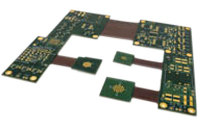
Flex and rigid-flex assembly array panelization is used to support efficient component assembly while accounting for the unique dimensional and material behaviors of polyimide-based circuits. Compared to rigid circuit boards, these arrays are typically smaller to manage tolerance variation and maintain accurate solder paste alignment. Careful consideration of part shape, rigid areas, material format, and breakaway methods is required to optimize cost and yield.
Assembly arrays are a common requirement in flex and rigid-flex circuit designs that require component assembly. While the overall goal is similar to rigid PCB panelization, flex-based designs introduce additional constraints related to material movement, complex geometries, and hybrid constructions. These factors require extra review to arrive at an assembly array configuration that supports reliable assembly and efficient manufacturing.
At a Glance: Array Panelization
- Smaller assembly arrays are typically required for flex and rigid-flex designs to manage the larger dimensional tolerances of polyimide materials and maintain proper solder paste stencil alignment.
- Complex part shapes and rigid area placement drive array configuration, often requiring parts to be rotated or interwoven to maximize production panel utilization and control cost.
- Material format, regional panel sizes, and breakaway methods directly impact panelization strategy, influencing array size, material utilization, and manufacturability.
Assembly Array Size
Flex and rigid-flex PCB arrays are generally produced smaller than rigid circuit board arrays. Polyimide materials exhibit larger dimensional tolerances and greater inherent manufacturing variation. Reducing the overall assembly array size limits dimensional changes across the panel, which helps maintain accurate solder paste stencil alignment during assembly.
Part Shape Considerations
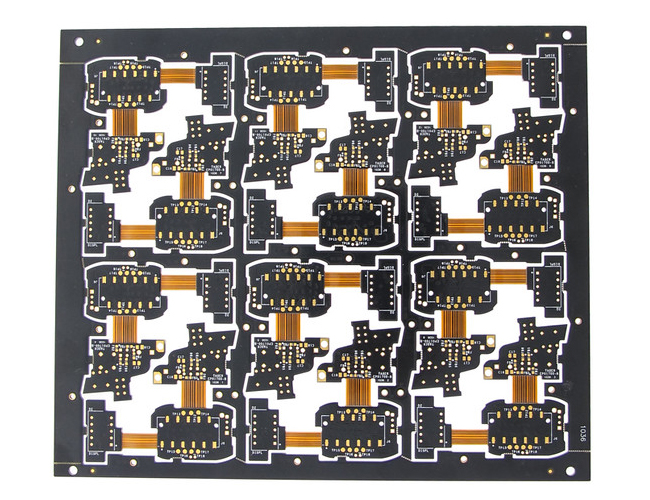
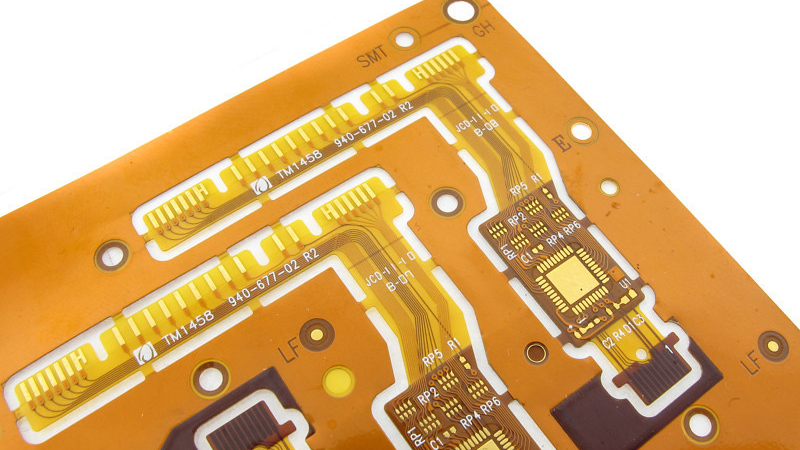
Flex and rigid-flex PCB designs often feature complex outlines driven by bend requirements or the incorporation of multiple rigid sections within a single part. To maximize panel utilization, parts are frequently rotated, intertwined, or positioned at angles. These approaches reduce overall assembly array dimensions while increasing production panel efficiency and lowering part cost.
Part Configuration Constraints
The configuration of parts within an array is influenced by the size and placement of rigid regions. In rigid-flex designs, rigid areas generally need to be adjacent from part to part to support the use of breakaway tabs.
In flex-only designs, rigidized areas and stiffeners introduce similar layout constraints. Variations in stiffener thickness and the use of pressure sensitive adhesives (PSAs) can further limit how parts are arranged within the assembly array.
Available Production Panel Sizes
Multiple assembly arrays are combined within a manufacturer's production panel. Available production panel sizes vary by supplier, and the relationship between the assembly array size and the production panel directly impacts material utilization and final part cost. Optimizing this fit is a key driver in reducing waste and improving manufacturing efficiency.
Material Sizes and Regional Differences
Flex material dimensions and formats vary by manufacturing region. Domestically, materials are commonly supplied in 18 × 24-inch panels, which are then cut down into smaller 12 × 18 inch or 9 × 12-inch panels as needed. Offshore materials are typically provided in roll form with fixed width and variable length. These differences result in region-specific production panel options.
Offshore production panels can be cut to different lengths, allowing greater flexibility in panel sizing. This adaptability makes it easier to match the panel dimensions to the assembly array, improving material utilization compared to fixed-size panels.
Material Size Reference
| Parameter | Value | Units |
|---|---|---|
| Domestic base panel size | 18 × 24 | in |
| Domestic cut panel sizes | 12 × 18, 9 × 12 | in |
| Offshore roll width | 250 | mm |
| Offshore roll length | 50-100 | m |
Part Retention Within the Assembly Array
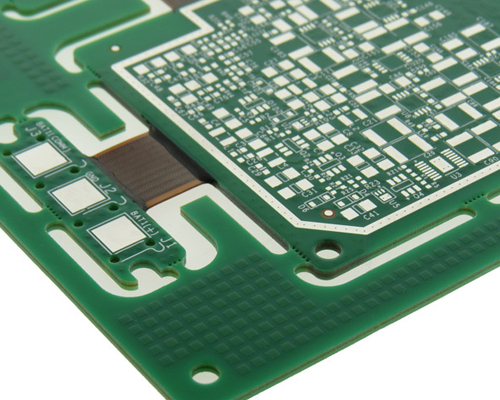
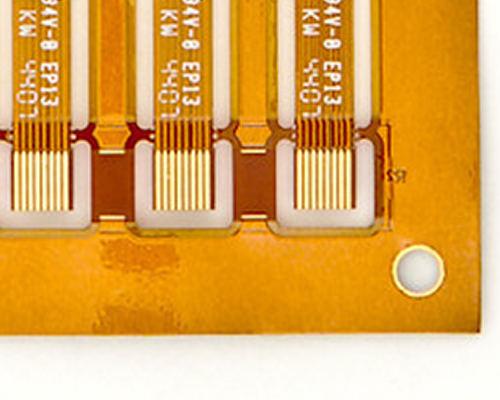
For rigid-flex PCBs, mouse bites are the most common breakaway method, similar to those used in rigid circuit boards. In flexible circuit designs, tabs are typically used, consisting of small uncut sections along the part outline that hold the part in place within the array during assembly.
The V-Score & Jump Scoring Process
V-scoring can be applied to rigid-flex designs but requires a post-assembly cutting operation to fully separate parts from the array. With this method, centrally located flex layers remain uncut during scoring. V-scoring is generally unsuitable for flex-only designs due to the rough edge finish it produces. Additionally, flex designs must include FR-4 stiffeners thick enough to support the V-scoring process.
Watch Our Video
The V-Score & Jump Scoring Process
A short video overview is available that walks through key considerations for flex and rigid-flex assembly array panelization, including configuration tradeoffs and breakaway options.
Frequently Asked Questions
Quick Links
- Why are flex and rigid-flex assembly arrays smaller than rigid PCB arrays?
- How does part shape affect assembly array layout?
- What limits how parts can be configured in an array?
- How do production panel sizes influence cost?
- What breakaway methods are used in flex and rigid-flex designs?
- When is V-scoring appropriate for flex-based designs?
Why are flex and rigid-flex assembly arrays smaller than rigid PCB arrays?
They are typically reduced in size to accommodate the larger dimensional tolerances of polyimide materials and to minimize variation across the array, which supports accurate solder paste stencil alignment.
How does part shape affect assembly array layout?
Complex outlines, bend areas, and multiple rigid sections often require parts to be rotated or placed at angles to reduce array size and improve production panel utilization.
What limits how parts can be configured in an array?
The size and placement of rigid areas, rigidized sections, stiffener thickness, and whether PSAs are used all influence how parts can be arranged and where breakaway features can be located.
How do production panel sizes influence cost?
The fit between the assembly array and the available production panel affects material utilization. Better alignment between the two reduces waste and lowers part cost.
What breakaway methods are used in flex and rigid-flex designs?
Rigid-flex designs commonly use mouse bites, while flex-only designs typically rely on tabs formed by small uncut sections of the part outline.
When is V-scoring appropriate for flex-based designs?
V-scoring is used in rigid-flex applications with sufficient FR-4 stiffener thickness and requires post-assembly cutting. It is generally avoided in flex-only designs due to edge quality concerns.
Optimize Your Flex Circuit Assembly Array Panelization
Epec reviews customer designs and proposes an initial assembly array configuration based on size, shape, material format, and breakaway requirements. This collaborative review process helps address manufacturing constraints early and identify opportunities to improve cost efficiency and overall assembly performance.
Request a Quote Request Design Support Request More InformationRequest a FREE Quote!
We are here to help you with all your rigid-flex PCB needs.
Get Your Quote Now! Not Ready for a Quote? Request more info or email us your inquiry.Ebook - Designing Flex Circuits for Dynamic Bending Applications
 Download Your Copy
... Or Download Our Flex & Rigid-Flex Circuits Design Guide
Free DFM File Check

Submit your flex or rigid-flex PCB data files and we will run a complete DFM check for manufacturability.
Submit Your Data