

Flex Circuit Stiffeners
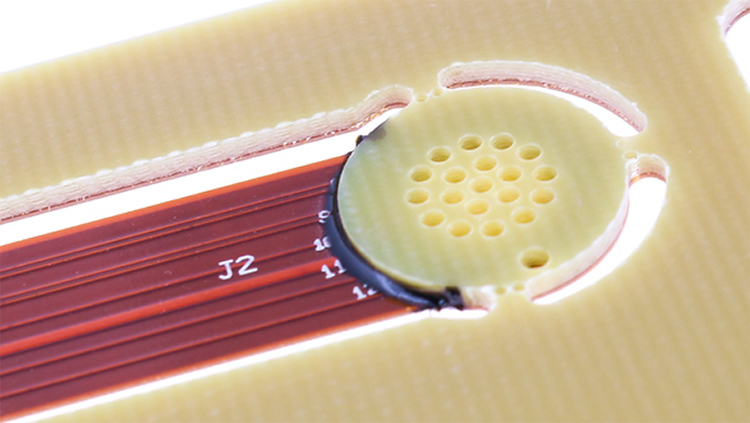
In flex circuits and rigid-flex PCBs, stiffeners are a common requirement for many designs because they improve overall durability and reliability. Their role is mechanical rather than electrical, supporting the flexible area where added rigidity is needed. Depending on whether stiffeners are required on one or both sides of the flex, additional lamination cycles may be necessary, which can increase both cost and lead time. Despite these tradeoffs, certain applications make stiffeners an essential design element.
Stiffeners are typically added as one of the final fabrication steps. They can be attached using either pressure-sensitive adhesive (PSA) or thermalset adhesive, depending on performance requirements and cost considerations.
Here are the Top 5 Reasons for Using Stiffeners on Flexible PCBs.
At a Glance: Flex Circuit Stiffeners
- Flex circuit stiffeners are a common mechanical requirement in many flex and rigid-flex PCB designs.
- Stiffeners improve durability and reliability by adding localized rigidity without contributing to electrical performance.
- Their use can impact cost and lead time, making proper specification and fabrication planning important.
Why Use Stiffeners in Flex Circuit Applications
Flexible PCB stiffeners are used to address specific mechanical and assembly challenges. They are commonly applied to reinforce areas exposed to repeated mechanical stress or to meet connector interface requirements.
Common Reasons for Using Flex Circuit Stiffeners
- Rigidizing connector areas to relieve stress from larger connectors or repeated insertions
- Meeting ZIF (Zero Insertion Force) connector thickness requirements
- Creating localized bend constraints
- Providing flat surfaces for SMT pads and components
- Minimizing stress on solder joints and components
- Managing heat dissipation when using metal stiffeners
- Rigidizing arrays for automated assembly without fixtures
For more information see our blog post on the purpose of a flex circuit stiffener.
Things to Know About Flex PCB Stiffeners
From a cost perspective, PSA attachment is often slightly less expensive than thermalset adhesive. Thermalset adhesive, typically traditional PCB prepreg, requires the flex PCB to return to the lamination press for heat and pressure curing. The adhesive must also be precut to match the stiffener shape, adding process complexity.
When stiffeners are used with plated through-hole components, they must be placed on the same side of the board where components are inserted to allow access to solder pads. Accurate registration between stiffener holes and plated-through holes is critical to ensure proper component insertion. Close collaboration with the flex PCB fabricator is required to confirm that the adhesive system and registration method meet design objectives.
Find out Why Flexible Circuit Boards Need Stiffeners.
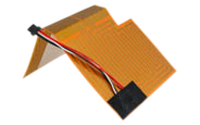
Component / Connector Stiffeners
Function:
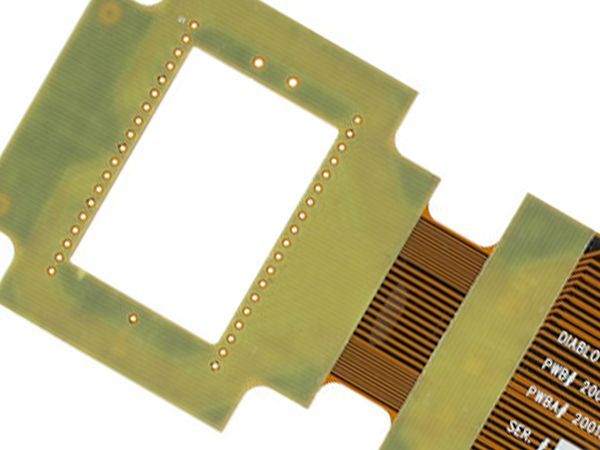
- Create localized rigid areas where components or connectors are attached
- Prevent flexing in component areas to protect solder joints
Material Options:
- FR4, Polyimide, Aluminum, Stainless steel
- Available in a variety of thicknesses
Attachment Methods:
- Thermally bonded with flex adhesive
- Pressure Sensitive Adhesive (PSA)
ZIF Stiffeners
Function:
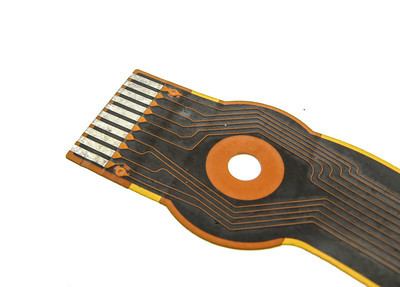
- Increase localized thickness at contact fingers to meet specific ZIF connector requirements
Material Options:
- Polyimide only
- Available in a range of thicknesses to meet design requirements
Attachment Methods:
- Thermally bonded with flex adhesive only
Localized Bend Constraints
Function:
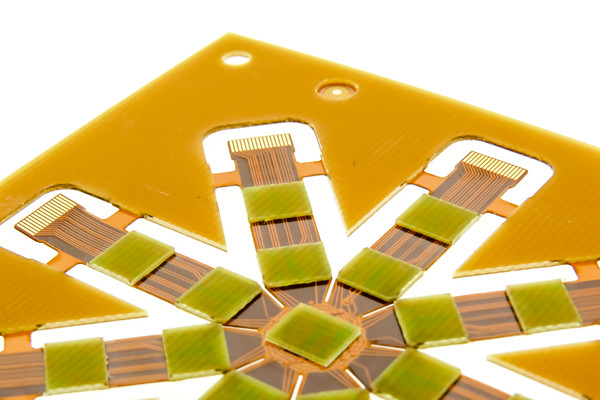
- Restrict bend areas to specific locations
- Support final assembly, defined bend requirements, or end-use needs
Material Options:
- FR4, Polyimide
Attachment Methods:
- Thermally bonded with flex adhesive
- Pressure Sensitive Adhesive (PSA)
Click here to view Various Stiffener Materials for Flexible Circuit Boards.
Design Tips for Cost and Reliability
Stiffeners are a critical part of many flex and rigid-flex designs, but they should only be used where they add real value. Every stiffener introduces additional material, handling, and processing steps, all of which increase cost and extend lead time.
To maintain reliability, stiffener and coverlay termination points on both the top and bottom layers should overlap by a minimum of 0.030 inches. This helps reduce stress concentrations and improves long-term durability in dynamic flex areas. Standardizing stiffener thickness across the design is another effective way to simplify fabrication and control cost.
A key cost driver that is often overlooked is the use of stiffeners on both sides of the circuit. When stiffeners are required on the top and bottom, each side must be processed separately using dedicated tooling in a lamination press. This means custom tooling has to be developed for each side, along with additional lamination cycles, handling, and alignment steps. The result is increased fabrication time, higher tooling costs, and greater complexity in manufacturing. Whenever possible, designs should be evaluated to determine if a single-sided stiffener approach can achieve the same mechanical performance.
Material selection also plays a major role in cost and lead time. Choosing common laminate thicknesses such as 0.010, 0.031, 0.047, or 0.062 inches helps ensure material availability and reduces delays. Each manufacturer carries a specific inventory, so aligning your design with standard materials and working closely with your fabricator will help avoid unnecessary cost and scheduling challenges.
Another important design tip is to minimize the number of stiffener shapes and unique part geometries. Each unique stiffener profile typically requires its own tooling, setup, and handling process, which adds cost and complexity. In addition, irregular geometries are more difficult to register accurately during lamination and require very precise routing to create the exact features that must align with the stiffener during attachment. This increases both fabrication risk and processing time. Standardizing shapes and simplifying geometries helps improve registration, reduce tooling requirements, and ensure more consistent manufacturing.
The objective is straightforward. Use stiffeners strategically, simplify the design where possible, and align with standard materials and processes to achieve the best balance of performance, cost, and manufacturability.
Typical Stiffener Thickness and Design Parameters
| Parameter | Value | Units |
|---|---|---|
| Common stiffener thicknesses | 0.010 / 0.031 / 0.047 / 0.062 | inches |
| Minimum overlap at termination points | 0.030 | inches |
How Automated Stiffener Placement Enhances Flex Circuit Reliability
Many manufacturers also support automated machines for placing stiffeners rather than manual placement for certain cases. Automated stiffener placement supports consistent registration and repeatability during fabrication.
This approach improves alignment accuracy, reduces manual handling, and helps maintain reliability when stiffeners are required in high-volume or complex flex circuit designs.
Maximize Durability and Efficiency
Selecting the right stiffener materials, thicknesses, and attachment methods is essential to achieving reliable flex circuit performance without unnecessary cost or leadtime impact. Working with experienced flex PCB manufacturers ensures stiffeners are properly specified and integrated into the overall design.
Watch Our Video
How Automated Stiffener Placement Enhances Flex Circuit Reliability
Frequently Asked Questions
Quick Links
- What is the primary purpose of a flex circuit stiffener?
- Are stiffeners part of the electrical function of a flex circuit?
- When are multiple lamination cycles required?
- What attachment methods are used for flex PCB stiffeners?
- Why is registration important for component stiffeners?
- What materials are commonly used for flex circuit stiffeners?
What is the primary purpose of a flex circuit stiffener?
A stiffener is used to add localized mechanical rigidity to an otherwise flexible circuit. Flex circuits are designed to bend, but there are areas where that is not desirable, such as component mounting zones, connector interfaces, and termination points. Without a stiffener, these areas are prone to excessive movement, which leads to solder joint fatigue, cracked traces, and long-term reliability issues. The stiffener creates a stable platform that allows components to be assembled, handled, and operated without introducing mechanical stress into the circuit.
Are stiffeners part of the electrical function of a flex circuit?
No. Stiffeners are strictly mechanical and play no role in the electrical performance of the circuit. They do not carry current, contribute to signal integrity, or impact impedance. However, they indirectly support electrical reliability by preventing mechanical failures that could compromise electrical connections. In other words, while they are not part of the circuit electrically, they are critical to ensuring the circuit continues to function as intended over time.
When are multiple lamination cycles required?
Multiple lamination cycles are required when stiffeners are applied in separate stages, particularly when they are placed on both sides of the circuit or when different materials and adhesives are used. Each side typically requires its own lamination setup, tooling, and press cycle to ensure proper bonding and alignment. In more complex rigid-flex constructions, additional lamination cycles may also be needed to build up the stack-up, integrate rigid sections, or attach sequential layers. Each added cycle increases cost, lead time, and the potential for misalignment or yield loss.
What attachment methods are used for flex PCB stiffeners?
Stiffeners are typically attached using either pressure-sensitive adhesive (PSA) or thermal set adhesive. PSA is applied at room temperature and offers a faster, lower-cost solution, making it suitable for less demanding applications. Thermal set adhesive requires heat and pressure in a lamination press, creating a stronger and more permanent bond that is better suited for high-reliability environments such as aerospace or medical. The choice of adhesive impacts not only performance but also processing complexity, tooling requirements, and overall cost.
Why is registration important for component stiffeners?
Registration is critical because the stiffener must align precisely with the circuit features it is supporting. In component areas, this often includes plated through holes or surface mount pads. If the stiffener is misaligned, even slightly, it can interfere with component insertion, create stress on leads, or prevent proper soldering. Poor registration can lead to assembly issues, reduced yields, and field failures. Achieving accurate registration becomes more challenging with complex geometries and tight tolerances, often requiring precision tooling and routing.
What materials are commonly used for flex circuit stiffeners?
The most common stiffener materials include FR4, polyimide, aluminum, and stainless steel, each selected based on the mechanical and environmental requirements of the application. FR4 is widely used for general-purpose rigidity and cost-effectiveness. Polyimide is chosen when flexibility and thermal compatibility with the base circuit are important. Aluminum provides excellent heat dissipation and is often used in high-power applications. Stainless steel offers maximum rigidity and durability, particularly in harsh or high-stress environments. Material selection directly impacts performance, manufacturability, and cost, so it must be aligned with the specific demands of the design.
Looking for More Information on Current Carrying Capabilities?
Maximize your rigid-flex PCBs current carrying capabilities with our expert guidance. Contact us now for help with your next flexible circuit project with reliable and safe designs.
Request a Quote Request Design Support Request More InformationRequest a FREE Quote!
We are here to help you with all your rigid-flex PCB needs.
Get Your Quote Now! Not Ready for a Quote? Request more info or email us your inquiry.Ebook - Designing Flex Circuits for Dynamic Bending Applications
 Download Your Copy
... Or Download Our Flex & Rigid-Flex Circuits Design Guide
Free DFM File Check

Submit your flex or rigid-flex PCB data files and we will run a complete DFM check for manufacturability.
Submit Your Data