
Light Guide Film HMI Technology
As technology evolves, customers across all industries are seeking thinner and more advanced lighting solutions in their designs to produce sleek user interface products. Engineering and marketing teams have shifted towards Human Machine Interface (HMI) designs with backlighting requirements that common existing technologies can fulfill at a low cost. This includes large backlit areas, uniform lighting, multiple colors, close proximity to other backlit areas, and low profile.
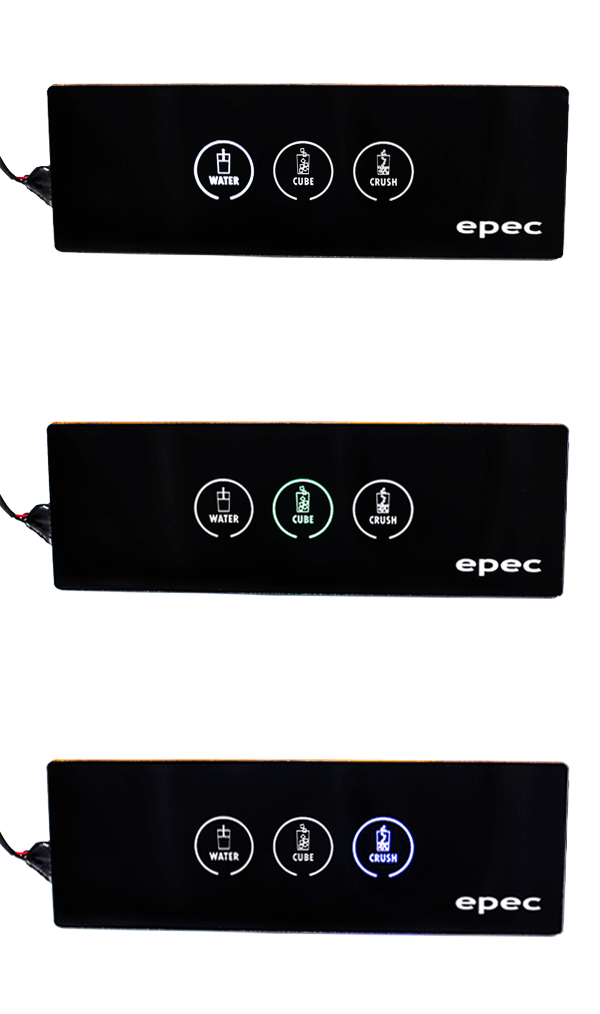
Light guide film lighting solutions designed can be custom manufactured into your user interface panel. Some custom designs we have built in the past allow backlit artwork for tactile keys and status indicators that have the ability to display multiple lighting configurations/colors depending on the reading from the battery level or sensors.
Check out Innovative HMI Technology and Design Advancements.
At a Glance: Light Guide Film HMI Technology
- Light guide film technology delivers thin, uniform backlighting for HMI designs, enabling large illuminated areas, multiple colors, and low-profile user interfaces.
- By using side-firing LEDs and microdot light distribution, light guide films provide consistent illumination while requiring fewer LEDs, reducing power consumption and conserving circuit board space.
- Ideal for backlit tactile keys, status indicators, and rugged applications requiring sealed, durable interfaces with advanced lighting effects and customizable illumination zones.
Advanced Backlighting HMI Solutions
HMI designs can be manufactured utilizing light guide film technology as a solution for applications that require more advanced functionality. Light guide film is a thin layer that can be placed over metal domes and spacers to provide uniform backlighting nearly anywhere on the graphic overlay of your product. Make the most of your backlighting options, HMI Backlighting Options for Maximum Performance.
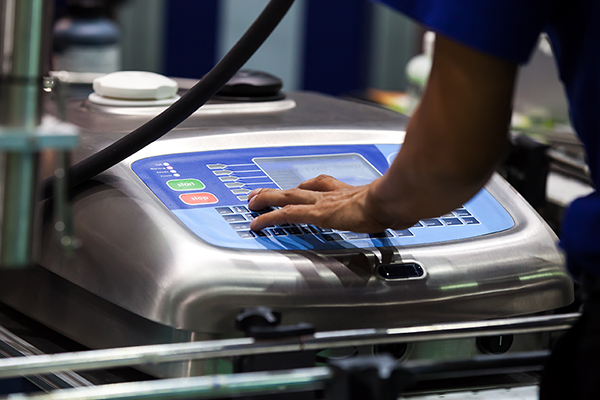 Industrial Touch Screen Control Panel Utilizing Backlighting Technology
It allows your product to remain thin since the layer is typically only 0.010", but can be as thin as 0.005". This technology utilizes fewer LEDs than you would typically use if you were to backlight a product with only discrete LEDs.
Requiring fewer LEDs means less power consumed and more space for other components on your circuit layer. Coupled with low tooling costs, this technology is the perfect solution for your backlighting needs.
How Does Light Guide Film Technology Work?
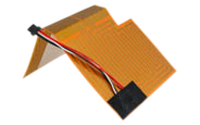
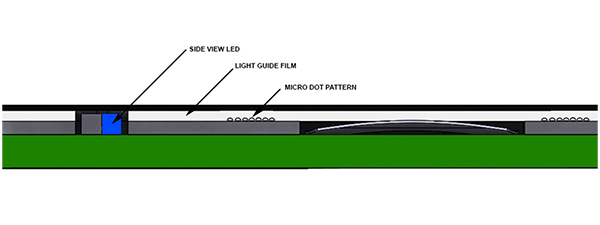
The light guide film is a 0.005-0.020“layer that incorporates microdots pressed into the imaged areas that are to be backlit. Cutouts are made in the film to place side view LEDs at the appropriate location. The light rays from the side view LED travel through the film and are refracted upwards towards the surface of the overlay once it hits the microdots, producing a uniform backlighting effect.
All designs are carefully reviewed by our engineering team. We consider the assembly in which the user interface product will be integrated into so we can address concerns such as possible light leaking if there are cutouts or displays involved. There is also the ability to utilize opaque materials to block light in undesired areas.
What Applications Will Light Guide Film Work Best For?
Light guide film is most commonly utilized in designs that require tactile keys with backlit artwork. We’re capable of lighting all of the keys at once or individually upon actuation. Large areas can be uniformly backlit with multiple colors so it makes this technology great for status indicators as well (battery, sensors, etc.).
All you have to do is let us know what the lighting requirements and configurations are and our engineering team will do the rest. When implemented in conjunction with our durable design features, the result is an aesthetically pleasing user interface product that can withstand harsh environments. A full seal is available on our user interface products and can meet or exceed an IP 67 rating.
Frequently Asked Questions
Quick Links
- What is light guide film technology?
- How does a light guide film create uniform illumination?
- What are the advantages of using light guide film instead of discrete LEDs alone?
- What applications are best suited for light guide film technology?
- Can light guide film technology be used in harsh environments?
What is light guide film technology?
Light guide film is a thin optical layer, typically between 0.005" and 0.020" thick, that distributes light from side-firing LEDs across a user interface to create uniform backlighting.
How does a light guide film create uniform illumination?
The film contains microdot patterns that redirect light upward from side-mounted LEDs. As light travels through the film and encounters these microdots, it is refracted toward the graphic overlay, producing an even lighting effect.
What are the advantages of using light guide film instead of discrete LEDs alone?
Light guide film requires fewer LEDs, reduces power consumption, supports thinner designs, lowers tooling costs, and provides uniform illumination across large or complex backlit areas.
What applications are best suited for light guide film technology?
Light guide film is commonly used for backlit tactile keypads, status indicators, battery-level displays, sensor displays, and other HMI applications requiring uniform illumination, multiple colors, or advanced lighting configurations.
Can light guide film technology be used in harsh environments?
Yes. When incorporated into a properly engineered user interface, light guide film can be part of sealed designs that meet or exceed IP67 requirements while providing durable, reliable performance in demanding environments.
Interested in Light Guide Film Technology?
Revolutionize your HMI designs with Epec's cutting-edge light guide film technology. Achieve sleek, power-efficient backlighting without compromising on functionality. Consult our engineering team for a custom solution now.
Request a Quote Request Design Support Request More Information
Request a FREE Quote!
We are here to help you with all your custom user interface needs.
Get Your Quote Now! Not Ready for a Quote? Request more info or email us your inquiry.